
How AI-Driven Personalization Can Boost Your E-commerce Conversion by 50%
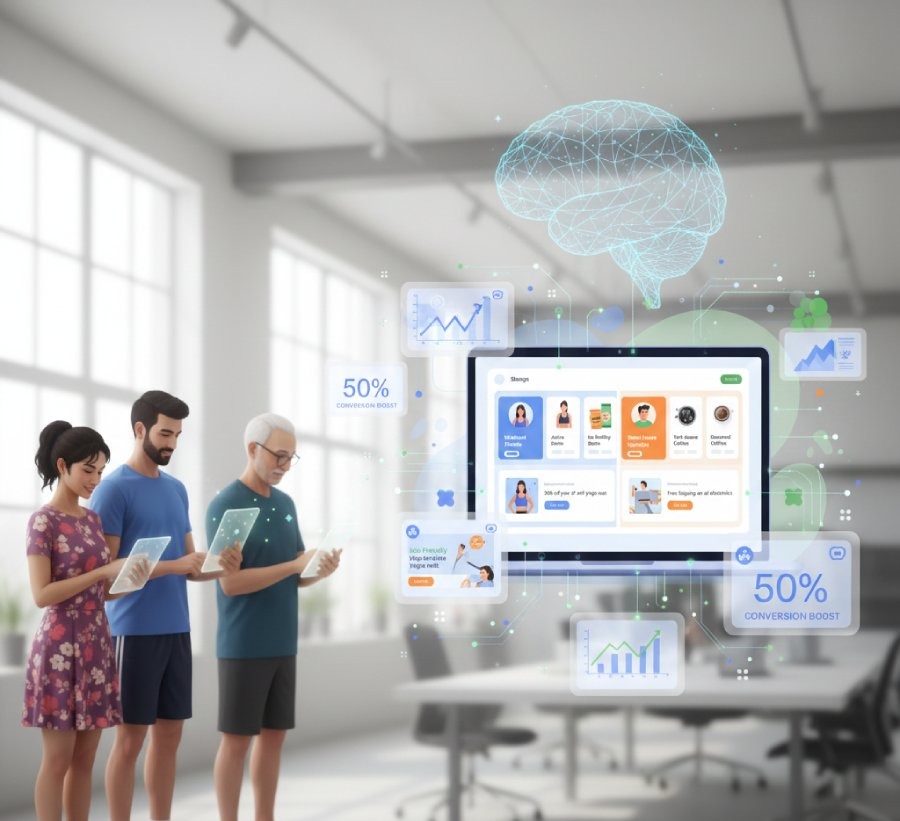
In today's crowded online marketplace, standing out means treating every shopper like a VIP. Enter AI-driven personalization - the game-changer that's not just a buzzword but a proven strategy to skyrocket e-commerce conversion rates. By delivering hyper-personalization, where sites show tailored content based on real-time behavior, businesses can lift conversions by up to 50%. Curious how? Let's dive in.
What Is Hyper-Personalization in E-commerce?
Hyper-personalization takes basic recommendations - like "customers also bought" - to the next level. It uses AI to analyze user data in real time, such as browsing history, purchase patterns, location, and even device type, then dynamically customizes the entire shopping experience.
Imagine a fitness enthusiast landing on your site: AI spots their interest in yoga gear from past clicks and instantly swaps the homepage banner to feature eco-friendly mats, while hiding bulky weights. For a busy parent, it might highlight quick-ship baby essentials. This isn't guesswork; it's real-time personalization powered by machine learning algorithms that process data at lightning speed.
Unlike static personalization (think email segments), hyper-personalization adapts on the fly, making every visitor feel seen. Tools like Google Cloud AI or Amazon Personalize make this accessible even for small e-commerce stores.
The Science Behind 50% Conversion Boosts
Numbers don't lie. McKinsey reports that AI-driven personalization can reduce customer acquisition costs by 50% while boosting revenues by 5-15%. Why the massive lift in e-commerce conversion rates?
Relevance Drives Action: Generic pages have bounce rates over 70%. Personalized ones cut that in half, as users find exactly what they want faster.
Behavioral Triggers: AI tracks micro-behaviors - like hesitation on a product page and responds with urgency tactics, such as "Only 2 left - grab yours!" tailored to the user's cart value.
Cross-Device Magic: 60% of shoppers switch devices mid-session. AI ensures seamless personalized shopping experiences across phone, tablet, and desktop.
A real-world example: Stitch Fix used AI hyper-personalization to personalize styling quizzes, achieving 300% higher engagement and conversion spikes. Similarly, ASOS saw a 26% revenue bump from AI-curated outfit suggestions based on real-time scrolls.
Key Strategies to Implement AI-Driven Personalization
Ready to harness this for your store? Start with these actionable steps, optimized for quick wins.
1. Leverage Real-Time Behavioral Data
Integrate AI tools that monitor live interactions. Platforms like Dynamic Yield or Optimizely use real-time personalization to swap product feeds, pricing, or CTAs. For instance, show premium upsells to high-value browsers and discounts to price-sensitive ones.
2. Build Dynamic Product Recommendations
Go beyond "top sellers." AI engines like those in Shopify's ecosystem analyze session data to recommend bundles - like pairing running shoes with moisture-wicking socks for marathon searchers - boosting average order value by 20-30%.
3. Personalize On-Site Search and Navigation
When users search "summer dress," AI refines results by past preferences (e.g., floral prints for repeat buyers). This slashes search abandonment by 40%, directly pumping e-commerce conversion rates.
4. Use AI for Exit-Intent Popups
Spot a user lingering on checkout? Trigger a hyper-personalized offer: "Loved those sneakers? Get 15% off with code YOURNAME." Tools like Nosto excel here, turning 10-15% of leavers into buyers.
5. A/B Test with AI Insights
AI doesn't just personalize - it predicts. Run tests on segments (e.g., mobile vs. desktop) to refine what works, scaling winners automatically.
Pro tip: Ensure GDPR compliance with transparent data use; build trust to amplify gains.
Overcoming Common Challenges
Skeptical about implementation? Data silos and privacy fears trip up many. Solution: Start small with first-party data (your site's analytics) and no-code AI plugins for platforms like WooCommerce or BigCommerce. Costs? Entry-level tools run $100-500/month, with ROI in weeks via conversion lifts.
Scalability isn't an issue either - cloud AI handles Black Friday traffic spikes effortlessly.
The Future: AI Personalization Gets Smarter
By 2027, 80% of e-commerce execs predict hyper-personalization as table stakes (Gartner). Voice search, AR try-ons, and emotion-detecting AI (via webcam sentiment) will make experiences eerily intuitive, pushing e-commerce conversion rates even higher.
Level Up Your Store Today
AI-driven personalization isn't a luxury - it's your edge in a sea of sameness. With hyper-personalization showing different content based on real-time behavior, expect 50%+ boosts in conversions, happier customers, and fatter bottom lines. Audit your site now: Are you personalizing, or just hoping?
What’s your biggest personalization hurdle? Drop a message - We'd love to brainstorm solutions!